

Creating Inclusive and Empowering Aquatic Experiences
21 March marks World Down Syndrome Day, a global awareness day recognised by the United Nations. The date symbolises the triplication (trisomy) of the 21st chromosome — the genetic characteristic of Down syndrome.
It is a day to celebrate the lives, achievements and contributions of people with Down syndrome, while advocating for inclusion, respect and equal opportunity.
In aquatic environments, inclusion is not just about access to the pool. It is about understanding, adapting and teaching in ways that honour each swimmer’s strengths and support their individual needs.
This blog explores what Down syndrome is, how it may present in swimming lessons, and practical strategies instructors can use to create safe, empowering and successful aquatic experiences.
Understanding Down Syndrome
Down syndrome is a genetic condition caused by the presence of an extra copy of chromosome 21. It occurs in approximately 1 in 700–1,000 births worldwide. While there are shared characteristics, every individual with Down syndrome is unique in personality, ability, health profile and learning style.
- Common characteristics may include:
- Low muscle tone (hypotonia)
- Joint laxity (hypermobile joints)
- Shorter stature
- Distinct facial features
- Developmental delay
- Mild to moderate intellectual disability
- Increased likelihood of certain medical conditions (such as congenital heart differences, hearing or vision challenges)
Importantly, Down syndrome does not define a person’s potential. With appropriate support and high expectations, individuals with Down syndrome thrive in education, sport, employment and community life.
Swimming can be a particularly powerful activity, supporting strength, coordination, cardiovascular fitness, independence and social connection.
How Down Syndrome May Present in an Aquatic Environment
Every swimmer is different. However, understanding common physical and cognitive traits can help instructors plan effectively.
1. Low Muscle Tone (Hypotonia)
Hypotonia can affect posture, endurance and body alignment in the water. Swimmers may:
- Fatigue more quickly
- Struggle to maintain streamlined positions
- Experience difficulty with propulsion
- Find kicking less efficient
They may appear floppy when floating or have difficulty sustaining arm actions over distance.
2. Joint Laxity
Hypermobile joints increase flexibility but reduce joint stability. This can:
- Affect shoulder control during strokes
- Increase risk of overextension
- Impact breaststroke kick alignment
Gentle strengthening and correct positioning are important to support joint protection.
3. Shorter Attention Span
Some swimmers with Down syndrome may require shorter, varied tasks to maintain engagement. Processing information can take longer, particularly if instructions are multi-step or abstract.
4. Communication Differences
Receptive language (understanding instructions) may be stronger than expressive language (speaking). Swimmers might understand more than they can verbally respond to. Clear, simple language supports comprehension.
5. Sensory Processing Differences
Some individuals may seek sensory input (enjoying splashing or deep pressure), while others may be sensitive to noise, echoing acoustics, or water on the face. Pool environments can be stimulating, so awareness of sensory load is important.
6. Medical Considerations
Instructors should be aware of potential health factors, such as:
- Atlantoaxial instability (AAI), affecting neck stability
- Cardiac conditions
- Hearing differences
- Medical clearance may be necessary for certain activities, particularly diving or vigorous tumbling.
Strengths in the Water
It is equally important to highlight strengths commonly seen in swimmers with Down syndrome:
- Strong visual learning skills
- Imitation ability
- Social motivation
- Determination
- Joyful engagement
- Love of routine
Many swimmers with Down syndrome demonstrate remarkable perseverance and pride in achievement. The water can provide freedom of movement not always experienced on land.

Teaching Tips for Inclusive Aquatic Practice
1. Use Clear, Concrete Language
Keep instructions short and direct.
Instead of:
“Make sure your body is aligned and engage your core.”
Try:
“Long body. Squeeze your tummy.”
Avoid figurative language that may be confusing. Pair verbal instructions with visual demonstration whenever possible.
2. Demonstrate First
Visual modelling is powerful. Show the skill, then break it into small steps.
For example:
- Blow bubbles
- Put nose in
- Submerge face for two seconds
Build gradually. Celebrate each step.
3. Break Skills into Manageable Components
Rather than teaching full freestyle immediately, isolate:
- Kicking with support
- Arm action standing in shallow water
- Breathing separately
Chunking tasks reduces overwhelm and increases success.
4. Allow Extra Processing Time
After giving an instruction, pause. Resist the urge to repeat immediately. Swimmers may require additional seconds to interpret and respond.
Silence can be supportive.
5. Build Strength Gently
Incorporate games that strengthen core and shoulder stability:
- Supported floating challenges
- Push and glide races
- Wall push-offs
- Resistance games using pool noodles
Repetition builds endurance safely.
6. Protect Joints
Encourage controlled movements rather than forceful, wide kicks. Monitor breaststroke technique carefully to avoid overextending knees or hips.
Avoid forcing extreme ranges of motion.
7. Create Predictable Routines
Consistency reduces anxiety and enhances independence.
A simple lesson structure might include:
- Welcome and warm-up
- Skill focus
- Game-based practice
- Review and celebration
Visual schedules or picture boards can support transitions.
8. Support Social Inclusion
Peer modelling can be highly effective. Pair swimmers thoughtfully with kind, patient partners. Promote a culture of encouragement rather than comparison.
Language matters. Focus on individual progress rather than speed or rank.
Teaching Tools That Support Success
Practical tools can enhance engagement and skill development.
Visual Cue Cards
Waterproof cards showing “kick”, “bubbles”, “back float” provide visual reinforcement and reduce reliance on verbal instruction.
Pool Noodles
Noodles offer adaptable support. They assist with buoyancy while allowing gradual independence.
Kickboards
Useful for isolating leg work, though instructors should monitor posture to prevent slouching.
Mirrors (Poolside)
If available, mirrors help swimmers observe body position and improve awareness.
Counting and Rhythm
Many swimmers respond well to rhythm. Counting aloud or using simple rhythmic cues can regulate movement patterns.
Choice Boards
Offering two activity options supports autonomy and engagement.
World Wide Swim School have created a teaching tool kit made up of visual cue cards, communication cards and more to assist swim teachers and swim schools in planning and conducting lessons. Take a look at our teaching kit here
Behaviour as Communication
Occasionally, instructors may encounter refusal, distraction or emotional responses. Behaviour should be viewed as communication.
Ask:
- Is the task too complex?
- Is fatigue setting in?
- Is sensory overload occurring?
- Is the swimmer unsure of expectations?
Adjust rather than assume defiance. A short break, reduced demand, or a simpler step can quickly restore participation.
Encouraging Independence
World Down Syndrome Day promotes the message of inclusion and self-advocacy. In swimming lessons, independence might look like:
- Carrying their own equipment
- Entering and exiting safely
- Choosing between activities
- Demonstrating skills to peers
Small responsibilities foster confidence and dignity.
Avoid over-supporting when a swimmer is capable. High expectations, paired with appropriate scaffolding, lead to growth.
Partnering with Families
Parents and carers are valuable sources of insight. They understand medical history, communication preferences and motivators.
Before commencing lessons, consider discussing:
- Health considerations
- Previous aquatic experience
- Sensory preferences
- Behavioural triggers
Motivating rewards
Collaborative communication builds trust and consistency.
Promoting Water Safety
Water safety remains paramount. Swimmers with Down syndrome can and should learn essential safety skills, including:
- Safe entries and exits
- Floating and recovery
- Reaching for assistance
- Recognising boundaries
Do not lower safety expectations. Adapt teaching methods, not safety standards.
Language Matters
Use person-first or identity-first language according to individual preference. Many families prefer “person with Down syndrome”, while some individuals may prefer “Down syndrome person”. Respect choice.
Avoid outdated or negative terminology. Words shape attitudes.
The Bigger Picture
Swimming is not only a life-saving skill. It is a vehicle for health, connection and empowerment. For individuals with Down syndrome, aquatic participation can improve:
- Muscle tone
- Cardiovascular fitness
- Coordination
- Confidence
- Social inclusion
- Mental wellbeing
The buoyancy of water reduces impact on joints while encouraging full-body movement. Success in the pool often transfers into other areas of life.
Celebrating World Down Syndrome Day in Your Swim School
You might:
- Wear colourful or mismatched socks to spark conversation
- Share educational posts about inclusion
- Highlight achievements of swimmers with Down syndrome
- Provide staff training on inclusive practice
- Display posters promoting diversity
Most importantly, use the day as a reminder that inclusion is not a one-day event. It is an everyday commitment.
A Final Reflection
World Down Syndrome Day invites us to look beyond chromosomes and diagnoses. It calls us to recognise humanity, potential and contribution.
In the pool, inclusion begins with mindset. When instructors focus on capability rather than limitation, progress follows. When teaching is flexible, respectful and strengths-based, swimmers flourish.
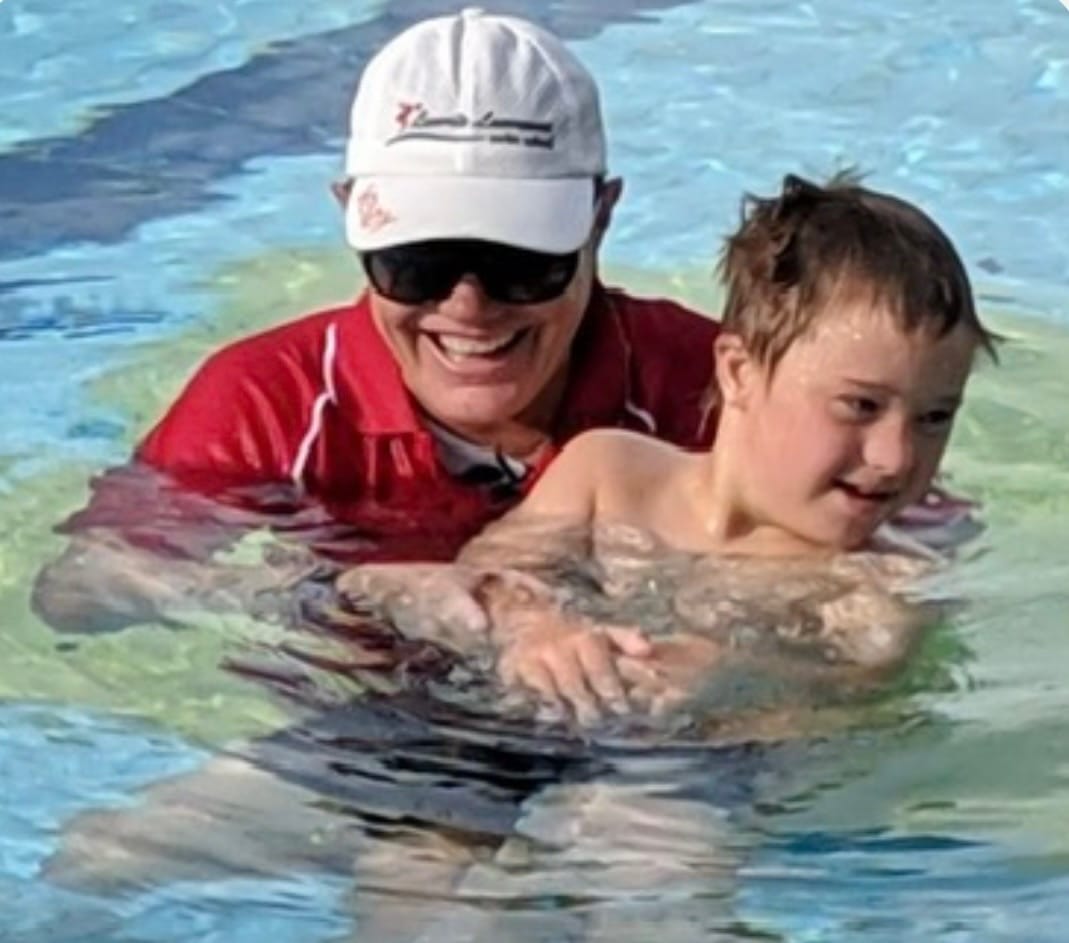
Every time a swimmer with Down syndrome achieves a back float, swims independently, or simply laughs with friends in the water, we witness what inclusion truly means.
Let us continue to build aquatic environments where every swimmer, regardless of ability, feels valued, challenged and safe.
Because in the end, inclusion is not about making space. It is about believing, teaching and celebrating together.
Discover the Swim Library
At World Wide Swim School, we are committed to fostering inclusive aquatic practice and supporting swim instructors, educators, and programs in creating accessible, empowering, and respectful learning environments for all.
Learn more with our Online PD Learning Packs - take your pick. If you want all the content join our Swim PD Academy Online Platform.
Stay up to date with World Wide Swim School Offers - Articles Subscribe to newsletter it's FREE!